
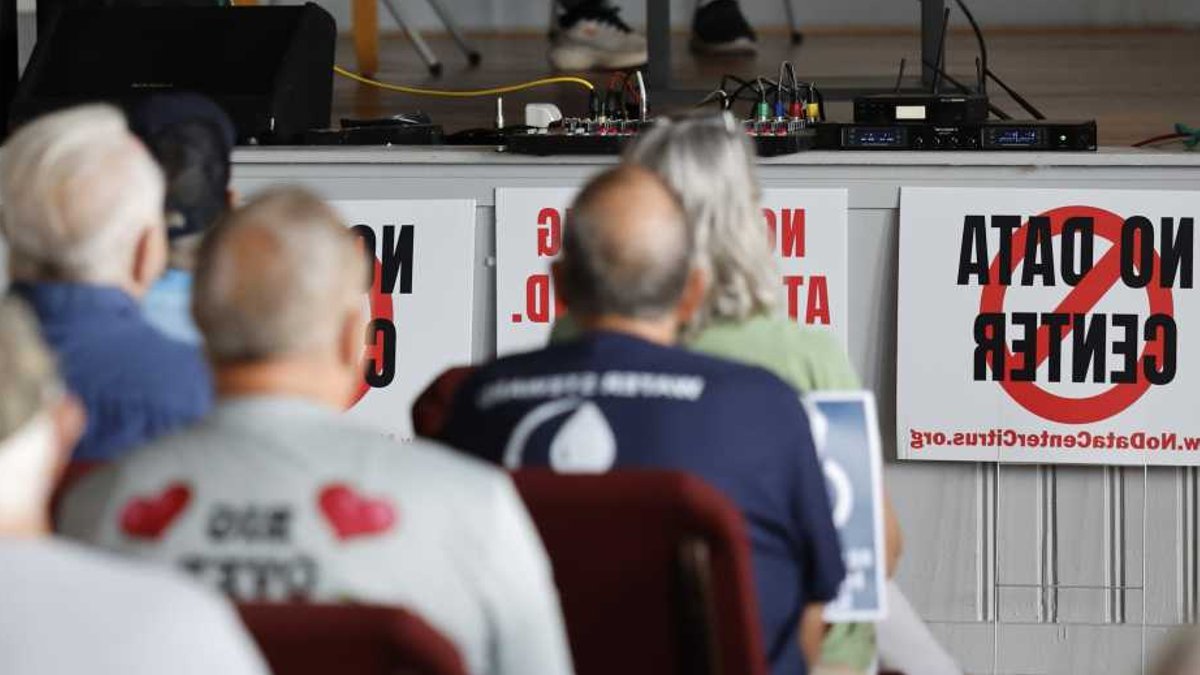
CIOs expanding AI infrastructure face growing resistance from local governments and communities.
In mid-July, protests against new data center construction occurred in 42 states. Residents and officials raised concerns about increased electricity and water costs, as well as the conversion of open land into server farms. The opposition has led to policy changes, with 10 states—including Florida, Georgia, and Virginia—halting new data center projects. Another eight states are weighing similar measures, according to the tracking site datacenterbans.com.
Tariffs and shifting cost assumptions
By May, 23 states had implemented large-load tariffs, requiring data centers to pay for infrastructure upgrades needed to support their operations. The shift disrupts financial models established as recently as last year, said Arif Gasilov, a partner at sustainability advisory firm Gasilov Group.
“Power cost assumptions from 2023 are outdated in nearly half the country,” Gasilov explained. “CIOs planning AI deployments dependent on colocation or cloud capacity should verify their provider’s rate structure under the new tariffs and adjust their budgets.”
Some states now treat multiple nearby data centers as a single large load, even when each facility operates independently. This classification could push smaller projects into higher-cost brackets.
Infrastructure constraints have reshaped tech expansion before. In the early 2010s, fiber-optic networks encountered similar resistance in rural areas, forcing providers to reroute or delay projects. The current challenge differs in scale, as AI workloads require significantly more power and cooling than traditional cloud services.
Compute capacity as a strategic risk
The shortage of data center availability may force organizations to rethink their AI strategies. Kevin Surace, CEO of biometric security firm TokenCore, likened compute capacity to electricity or semiconductors—a resource so essential that shortages could derail projects.
“Limited data centers mean less available capacity, reduced geographic redundancy, longer provisioning times, and greater dependence on a small number of cloud providers,” Surace said. Companies without secured capacity may find their AI roadmaps feasible on paper but impossible to execute on schedule.
Surace noted that opposition to data centers often stems from outdated perceptions. Modern facilities consume far less water than older designs, and some now operate on renewable energy. Nuclear power could soon become an option, though regulatory hurdles remain. For now, cost pressures persist.
“AI compute demand is rising, so restricting the supply of facilities, electricity, and high-density capacity will drive up cloud pricing, colocation costs, and accelerator access,” he said. Surace recommended treating compute and energy as supply-chain risks, securing multiyear agreements, and avoiding reliance on single providers or regions.
Efficiency over brute force
The era of unlimited, cheap compute is ending. The focus has shifted to how AI will evolve and at what cost.
Organizations that maintain regulatory readiness will be better positioned to adapt to these changes.


