
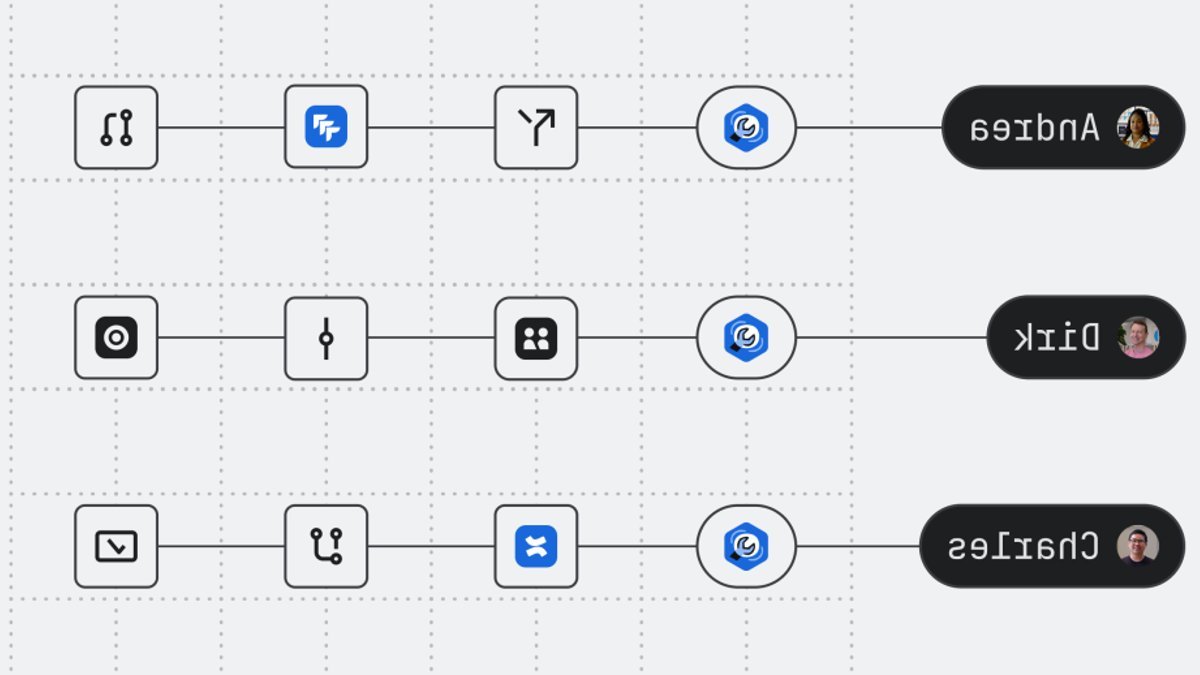
Engineering teams that are scaling AI agents are finding that the initial speed gains are eroding as coordination problems emerge.
Hidden costs of parallel AI work
When ten developers each launch several agents against the same codebase, the effort quickly becomes an alignment issue. Agents can rewrite overlapping sections of a system faster than a human can open a pull request, but they do so without awareness of each other’s actions. The result is a coordination tax: two agents may solve the same problem in different ways, and a batch of confident changes lands only to require untangling later.
Tech debt also accumulates faster than review cycles can keep up. Parallel agents produce more changes than any team can read closely, and the shortcuts pile up silently. Over weeks, the codebase becomes harder to understand and maintain, long after the speed that created it fades.
Real spend on tokens and rework adds another hidden expense. Every duplicated effort and every reverted change is paid for twice—once to generate it, again to undo it. The bill for work that lands and then gets pulled back out is easy to miss and hard to stop growing.
Why better agents aren’t enough
Improving the queue or merge handling of agents may reduce some friction, but the core issues require human decisions. Teams must define what each agent is allowed to touch, decide which changes need a human in the loop, and keep parallel streams aligned to a single intent.
First, a shared source of truth that every stream reads from. When each agent and developer works from the same current picture of the product and recent decisions, they build toward the same target. If that picture lives in scattered chat histories or someone’s memory, streams drift the moment they start.
Second, clear ownership over every piece of work. When an agent produces something, a specific person must own accepting it, reconciling it with other in‑flight changes, and standing behind the result. Orchestration without ownership is just faster chaos.
Related: Untraceable AI answers raise reliability concerns
Third, boundaries that keep streams from colliding. Agents need scoped lanes—each works on a defined area, with constraints, and routes changes to sensitive systems to a human. Pre‑set boundaries prevent costly collisions that would otherwise need to be unwound.
Leaders who succeed stop focusing on individual developer productivity and instead design a centralized system of record for agentic work. That system decides where work originates, how it gets scoped and assigned, how results are reconciled, and where the record lives, ensuring the next wave of work starts from an accurate picture rather than a stale one.
Done well, orchestration turns parallel agents into leverage: more work moving at once, still pointed at one goal, still owned by real people. Otherwise, it turns them into a faster way to run up all three bills at once.
In practice, the shift resembles past attempts to coordinate large‑scale microservice deployments. Those efforts also stumbled when teams ignored a single source of truth and clear ownership, leading to “integration hell.” The AI context amplifies the problem because agents can generate code at a rate that outpaces human review, making the need for disciplined orchestration even more urgent.
Alignment debt grows quickly.
Every week a team scales agents without a coordination system, it accumulates alignment debt that becomes more expensive to unwind. Organizations that build orchestration now, while habits are still forming, will be the ones who achieve the speed that AI promised without the hidden costs.


